
Complete IT Toolkit for Restaurant Opening
Opening a restaurant is one of the most exciting and challenging entrepreneurial ventures. While most of your attention will be on the food, location, and decor, the IT infrastructure you put in place from day one will have a profound impact on your operational efficiency, customer experience, and ultimately your profitability. The technology choices you make at the opening stage are particularly important because switching systems later is costly, time-consuming, and disruptive.
Based on our research with over 500 restaurant owners in Japan, here is the complete list of IT tools you need to consider before opening day, organized by priority:
| Priority | Tool Category | Purpose | Monthly Cost Range |
|---|---|---|---|
| Essential | POS / Cash Register | Payment, sales tracking | 0-30,000 yen |
| Essential | Internet / Wi-Fi | Connectivity for all systems | 3,000-5,000 yen |
| Essential | Accounting Software | Tax, bookkeeping | 1,000-3,000 yen |
| High | Self-Ordering System | QR ordering, labor savings | 0-15,000 yen |
| High | Reservation / Waitlist | Customer flow management | 0-20,000 yen |
| Medium | Website / Online Presence | Discovery, branding | 0-10,000 yen |
| Medium | Kitchen Display (KDS) | Order management in kitchen | 0-10,000 yen |
| Optional | Inventory Management | Food cost control | 0-15,000 yen |
| Optional | Staff Scheduling | Labor management | 0-5,000 yen |
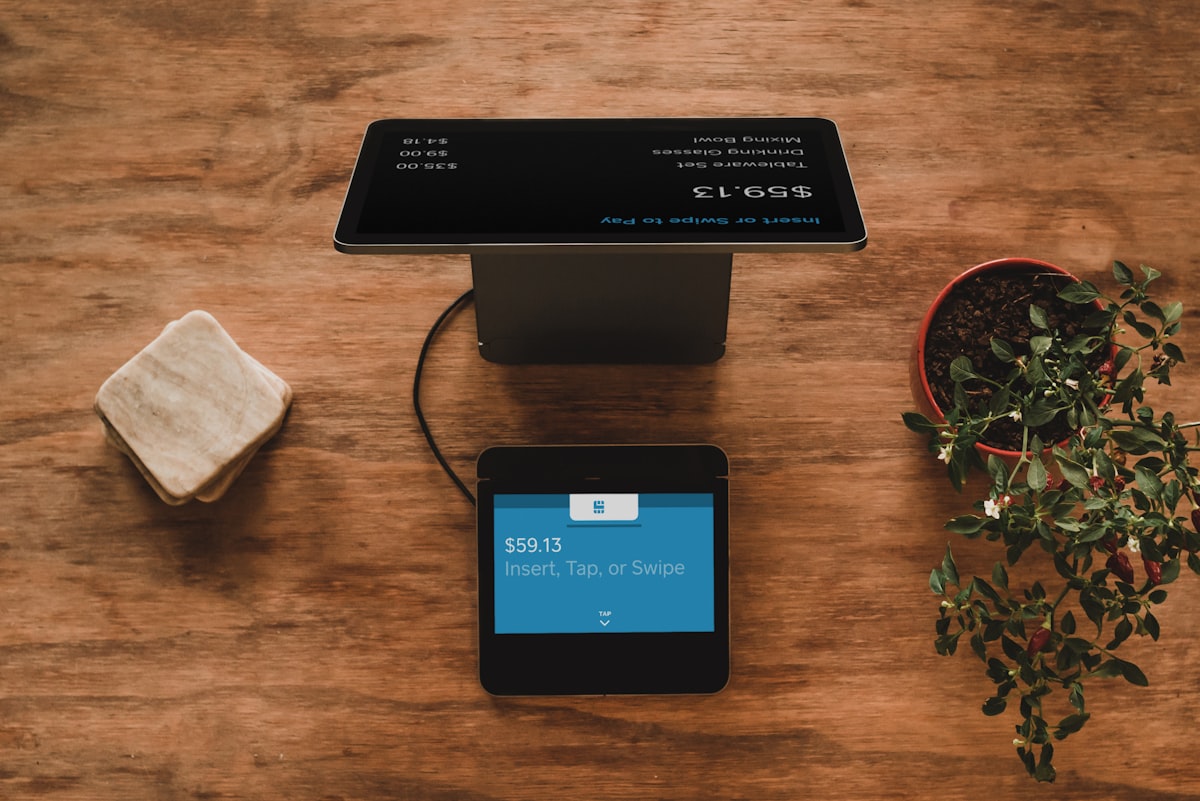
Opening Day Reality: Most new restaurant owners spend 70-80% of their IT budget on the POS system alone, leaving little for other tools. This is a critical mistake. The POS is important, but it's just one piece of the puzzle. Choosing a platform that covers multiple categories simultaneously can save 50-70% of your total IT budget.
How to Choose the Right POS System
The POS system is the heart of your restaurant's technology stack. It touches every transaction, every order, and every piece of financial data. Getting this choice right is critical. Here are the key factors to evaluate:
Cloud vs. Local Installation
Legacy POS systems install locally on dedicated hardware — if the hardware fails, your entire operation stops. Cloud-based POS systems (like Shopify POS, Square, Airレジ) store data in the cloud and run on standard tablets. Benefits include: automatic backups, access to data from anywhere, automatic software updates, and no risk of data loss from hardware failure. The only requirement is a reliable internet connection — and most cloud POS systems now include offline mode for brief outages. For a new restaurant in 2026, there is virtually no reason to choose a local-only POS system.
Integration Capabilities
The single most important factor in choosing a POS for a new restaurant is how well it integrates with other tools. A POS that connects to your ordering system, reservation platform, accounting software, and analytics dashboard eliminates duplicate data entry and provides a single source of truth for your business. Ask yourself: Does this POS connect to the self-ordering system I want to use? Can it share data with my accounting software? Does it provide APIs for future integrations? The cost of a POS that doesn't integrate well extends far beyond its monthly fee.
| POS System | Initial Cost | Monthly | Self-Order Integration | EC Site |
|---|---|---|---|---|
| Shopify POS | 0 yen | From 4,100 yen | Yes (Excuseme) | Yes (built-in) |
| Square | 0 yen | 0 yen | Limited | Basic |
| Airレジ | 0 yen | 0 yen | No | No |
| USENレジ FOOD | 200,000+ yen | From 12,000 yen | Optional | No |
| Smaregi | 0 yen | From 5,500 yen | Optional | No |
Reservation and Waitlist Systems
Whether you need a reservation system, a waitlist system, or both depends on your restaurant type and customer flow. High-end restaurants typically need reservations, while casual dining and ramen shops benefit more from waitlist management. Here's how to decide:
For restaurants that expect walk-in traffic and occasional lines (ramen, popular cafes, izakayas), a digital waitlist system is essential. It allows customers to join the queue remotely, receive SMS notifications when their table is ready, and eliminates the frustration of standing in a physical line. The data shows that restaurants with digital waitlists see 15-25% fewer walk-aways compared to those with traditional paper-based first-come-first-served systems.
For restaurants that take reservations, the system should integrate with your POS to automatically track no-shows, optimize table assignments, and build customer profiles over time. Standalone reservation systems like TableCheck or TORETA work well, but they add another monthly subscription and another data silo. An integrated approach — where reservations, ordering, and payment all flow through one platform — is more efficient and cost-effective in the long run.
Menu Management and Online Presence
Menu management is often overlooked in the IT planning phase, but it quickly becomes a pain point as your restaurant grows. If your POS has one set of menu items, your QR ordering system has another, your Google Maps listing has a third, and your website has a fourth, you're spending hours every week keeping them all in sync — and inevitably something will be out of date.
The ideal solution is a single product catalog that feeds all channels. This is exactly what Shopify provides: you enter each menu item once — with name, description, price, photos, and variants — and this information automatically appears in your POS, your Excuseme QR ordering menu, and your online store. Change a price once, and it updates everywhere simultaneously. Add a seasonal item, and it's available across all channels in seconds.
As for your online presence, many new restaurant owners make the mistake of paying a web development agency 200,000-500,000 yen to build a custom website. For most restaurants, this is unnecessary. Shopify's built-in online store gives you a professional, mobile-responsive website that doubles as an e-commerce platform for takeaway orders, merchandise, or gift cards. Combined with a well-maintained Google Business Profile (free), you have everything you need for online discovery and customer engagement.
How Shopify + Excuseme Covers Everything
The traditional approach to restaurant IT involves assembling a patchwork of tools from different vendors: a POS from one company, a reservation system from another, a website from a third, and so on. Each has its own login, its own data format, and its own billing. Shopify + Excuseme offers a fundamentally different approach: a unified platform where everything connects natively.
Here is what Shopify + Excuseme covers from a single platform: POS and payment processing (Shopify POS with tap-to-pay, credit cards, QR payments), self-ordering (Excuseme QR code table ordering with multilingual support), menu management (Shopify product catalog — update once, reflect everywhere), website and online store (Shopify online store with takeaway ordering), customer management (Shopify customer profiles with order history), analytics and reporting (Shopify Analytics with sales, customer, and product insights), and kitchen display integration (Excuseme staff dashboard for real-time order management).
One Platform Advantage: With Shopify + Excuseme, you have one login, one dashboard, one product catalog, one customer database, and one monthly bill. This simplicity isn't just convenient — it's a competitive advantage that lets you focus on cooking and hospitality instead of managing technology.
Startup Cost Simulation: Traditional vs. Shopify + Excuseme
Let's compare the actual costs of setting up restaurant IT infrastructure using the traditional multi-vendor approach versus the Shopify + Excuseme integrated approach:
| Item | Traditional Approach | Shopify + Excuseme |
|---|---|---|
| POS hardware | 200,000-500,000 yen | 0 yen (use existing tablet) |
| POS monthly fee | 10,000-30,000 yen | 4,100 yen (Shopify Basic) |
| Self-ordering system | 5,000-20,000 yen/month | 0 yen (included with Excuseme) |
| Website creation | 200,000-500,000 yen | 0 yen (Shopify built-in) |
| Website maintenance | 5,000-30,000 yen/month | 0 yen (included) |
| Reservation system | 5,000-20,000 yen/month | 0-5,000 yen (Shopify app) |
| Year 1 Total | 700,000-1,700,000 yen | 49,200-109,200 yen |
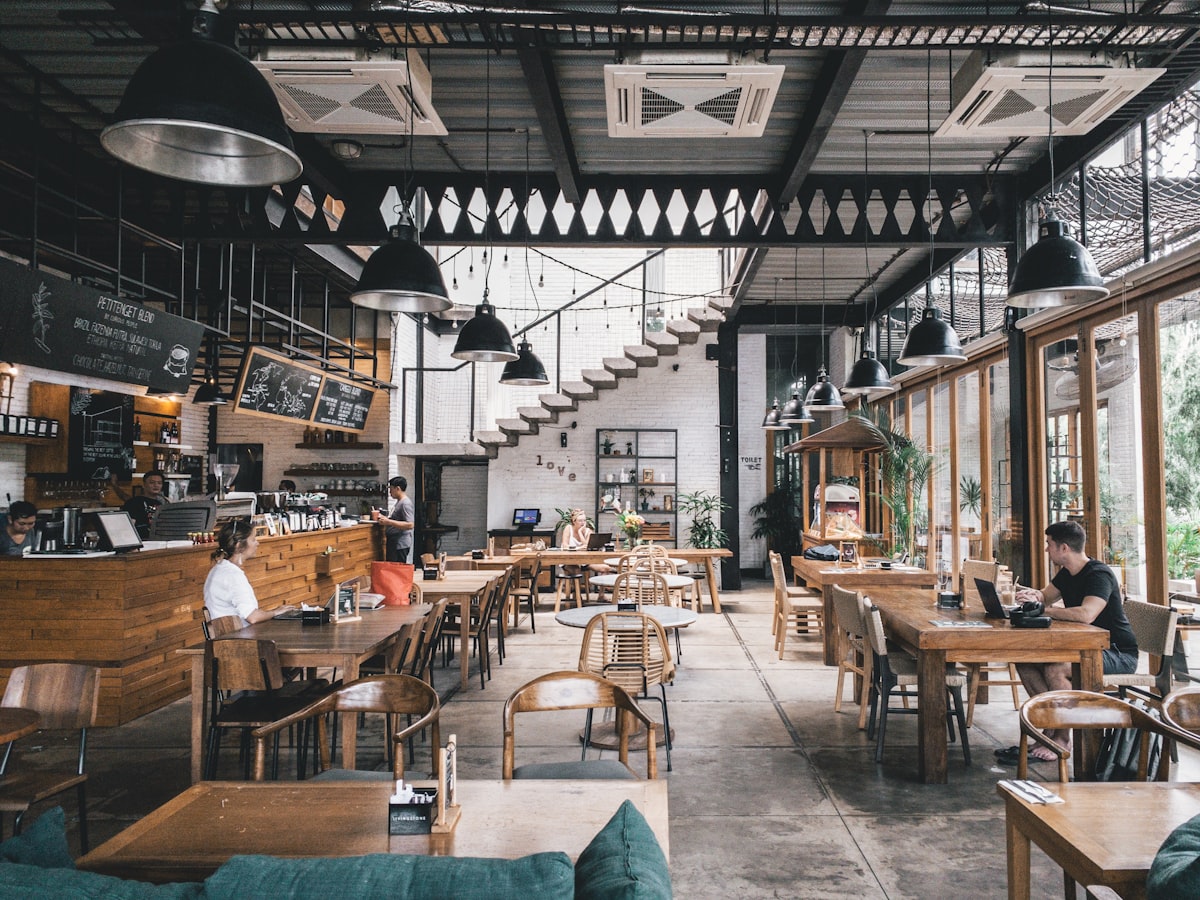
The difference is staggering. A new restaurant using the traditional multi-vendor approach can expect to spend 700,000 to 1,700,000 yen in their first year on IT alone. The same restaurant using Shopify + Excuseme spends 49,200 to 109,200 yen — a savings of 85-93%. And the Shopify + Excuseme approach provides better integration, more features, and greater flexibility. That savings of 600,000 to 1,600,000 yen in the first year can instead go toward what truly matters: better ingredients, better staff training, or simply a larger cash reserve to weather the challenging first months of operation.
Opening Advice: Don't try to implement everything at once. Start with Shopify POS + Excuseme on day one, and add capabilities (online store, analytics optimization, reservation system) as you learn what your restaurant truly needs. The beauty of the Shopify ecosystem is that you can grow into it at your own pace.